A new final cost estimate for the entire metro expansion has now been presented. For the first time, this updated projection integrates cost overruns, risk assessments, and index adjustments in a far more systematic and comprehensive manner than previous estimates.
The updated assessment indicates that the final cost could reach SEK 99.8 billion in current price levels, representing an increase of SEK 22.9 billion compared to existing funding frameworks and political decisions.
Of this total, SEK 20.8 billion constitutes a variance against the joint funding agreement shared by the Swedish State, Region Stockholm, and the four municipalities where the metro is being constructed. Out of this specific variance, SEK 5.5 billion has already been disclosed in previous estimates.
An additional SEK 2.1 billion represents a variance against previous implementation decisions for elements funded entirely by Region Stockholm—specifically new rolling stock, rail depots, and a modernized signaling and traffic system.
Shifted Timelines
The assessment projects that revenue service start dates will be delayed by approximately one year for the extensions to Barkarby and Arenastaden, and by nearly two years for the extensions to Nacka and Söderort. For the new Yellow Line to Älvsjö, current estimates point toward a traffic launch in 2037.
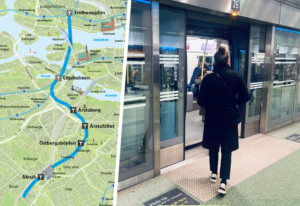
The expanded metro network encompasses 18 stations, 30 kilometers of new tracks, and two depots.
(See project-specific estimates in the data tables below.)
Greater Risk transparency
A key methodological departure from previous estimates is that future risks are now explicitly quantified and incorporated directly into the projection. These risks range from cascading delays across sequential civil engineering contracts to prolonged property and land negotiations, or poorer-than-anticipated rock quality. All risks with a probability exceeding 70 percent of materializing are now included, alongside a dedicated risk reserve established for every project. In total, these accounted risks sum to SEK 9.8 billion.
– Under our agreements with the financing parties, these risks were previously monitored separately and managed dynamically. Through this comprehensive review, we now have a much more complete picture of the project’s preconditions and trajectory leading up to 2037, says Per Ling-Vannerus, Head of the Metro Expansion Administration.
The review process has been underway for an extended period. The findings have now been officially presented to both the Traffic Committee and the financing partners, and the final cost estimate will also be featured in the 2026 interim report for the administration.
Time Equals Money
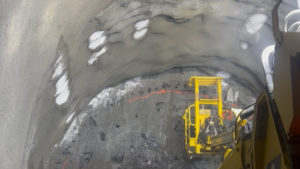
The escalating costs are largely attributable to extended construction timeframes. Delays originating from heavy rock excavation contracts have compounded over time, and several active construction packages are experiencing sluggish progress. Furthermore, the time required for integrated systems testing and commissioning—preparing the infrastructure for revenue service—was previously underestimated.
Macroeconomic trends within the construction and civil engineering sector have also taken a toll. Aside from general construction inflation, the historical gap between the Consumer Price Index (CPI) and the specific cost index for the construction sector has widened significantly over a sustained period.
– Index development is taking a heavy toll on our budget. In our industry, costs are compounding at a faster rate than in the broader economy, which impacts us negatively, notes Per Ling-Vannerus.
The metro expansion operates under a funding model where compensation is benchmarked against cost bases known when the agreements were originally signed. Additional expenditures—both anticipated and unforeseen—have been managed via a separate three-tier model where the co-financing parties jointly determine how to absorb them. The foundational agreements have been renegotiated twice: first between 2019 and 2021, and subsequently between 2024 and 2025. No new funding packages or schedules have been formally ratified as yet.
Metro Construction Moves Forward
Work on the metro expansion continues according to plan across all projects. Current efforts are intensely focused on securing schedule momentum and mitigating the realization of risks identified during the review.
– This is our best assessment based on the data available to us today. Our ambition is naturally to manage and contain certain risks, while others remain outside our direct control, such as inflationary trends within the construction sector. We hope this review provides all participating parties with the strongest possible foundation for our continued joint endeavors. Our primary focus remains operational momentum and delivering a metro network that will generate immense value for the residents of Stockholm County for generations to come, concludes Per Ling-Vannerus.
Projected Traffic Launch Dates
| Extension Project | Original Planned Launch | Updated Assessed Launch |
|---|---|---|
| Blue Line to Barkarby | Q4 2027 | Q4 2028 |
| Green Line to Arenastaden | Q4 2028 | Q4 2029 |
| Blue Line to Nacka & Söderort | Q2 2030 | Q1 2032 |
| Yellow Line to Älvsjö | 9 years post legally binding railway plan | 2037 |
Projected Final Costs in Current Price Levels (SEK Billions)
| Project | Agreed Funding | Assessed Cost Increase | New Final Cost Forecast |
|---|---|---|---|
| Blue Line to Barkarby | 7.4 | 2.5 | 9.9 |
| Green Line to Arenastaden | 9.7 | 2.7 | 12.3 |
| Blue Line to Nacka & Söderort | 29.6 | 5.0 | 34.7 |
| Yellow Line to Älvsjö | 16.5 | 10.6 | 27.1 |